Leading Innovation, the most essential course this fall – Apply now!

Publicerat 6 October 2017

One of the biggest challenges for all mature Swedish companies is how to become or stay innovative. To address this issue KTH Executive School has handpicked the best from academia and industry to a three-day course in Leading Innovation.

Max 25 deltagare
Max 25 participants

The course combines theories with hands-on methodology and address:
– Innovation Management
– Innovation Action
– Innovation Leadership

The course takes place on November 29-30 and December 14. Read more and apply here.

Höstens kurs i Innovation Leadership – Ansök nu!

Publicerat 6 October 2017

Innovation är en av de största utmaningarna för svenska bolag. För att möta detta behov har KTH Executive School har samlat det bästa från akademi och näringsliv för att skräddarsy en kurs till dig som kombinerar teorier och konkreta metoder för att öka innovationskraften i ditt bolag.

Kursen är den 29/11, 30/11 och 14/12 i Stockholm. Ansökan är öppen och du hittar den här.

Max 25 deltagare
Max 25 deltagare

Kursen berör:
– Design av innovationsprocessen.
– Implementation och ledarskap över innovationsprocesser.
– Hur kursdeltagarna kan bedriva innovation i just sin organisation.

Mer information om kursen Innovation Leadership kan du hitta här!


Lean start-up in mature companies

Publicerat 3 October 2017

New innovative idea starts with assumptions. But how do we move from assumptions to facts and business as fast as possible? Today we discuss Lean Start-up in mayor companies together with Andy Cars.

“If the rate of change on the outside exceeds the rate of change on the inside, the end is near.”

Jack Welch

Läs mer

The death or the rebirth of universities in a time of disruption?

Publicerat 26 September 2017

The higher education system is facing a time of disruption. The rapid development of Massive Open Online Courses, MOOCs, has generated a lively debate. The effect on the existing higher education is in focus. Can MOOCs really be an alternative to face to face classroom teaching? Despite this legitimate scepticism, the number of universities offering MOOCs increase at a rapid pace. As MOOCs went from an experimental phase to become well established in 2012, more and more universities jumped on the bandwagon. Some clearly see an opportunity, while others seem to join without a clearly formulated strategy. Jumping or not, all universities are today expected to have an answer to the question: What are your plans within the MOOC area?

Ny bild (26)

The disruptive innovation theory indicates that we can expect dramatic changes

So far, the phenomenon follows the disruptive innovation theory by Clayton Christensen: incumbents regard the new service to be of a much lower quality; the new innovation target underserved or new customer segments; the service is offered at much lower price levels; the offer is less complete but holds the potential to develop fast meeting demands of present customers, “ordinary students” in this case. The disruptive innovation theory indicates that we can expect dramatic changes within the higher education industry. The core of the disruptive nature of MOOCs is, compared to ordinary face to face higher education, the very limited incremental cost to add one additional student along with that the service is ubiquitous. These two characteristics combined, lay the foundation for a very fast penetration. This pattern has earlier been seen for other internet based business models challenging established industries. Läs mer

Professor Emeritus Eric Giertz

Publicerat 26 September 2017


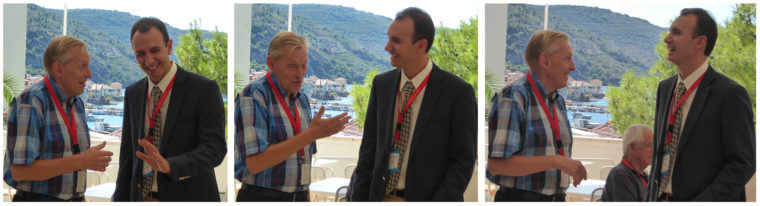
KTH Executive School thank our founder Professor Emeritus Eric Giertz for his contributions. Eric has been in the forefront in research connected to business development and technology for decades and in this movie you can hear about some of his work.

The death or the rebirth of universities in a time of disruption?

Publicerat 26 September 2017

The higher education system is facing a time of disruption. The rapid development of Massive Open Online Courses, MOOCs, has generated a lively debate. The effect on the existing higher education is in focus. Can MOOCs really be an alternative to face to face classroom teaching? Despite this legitimate scepticism, the number of universities offering MOOCs increase at a rapid pace. As MOOCs went from an experimental phase to become well established in 2012, more and more universities jumped on the bandwagon. Some clearly see an opportunity, while others seem to join without a clearly formulated strategy. Jumping or not, all universities are today expected to have an answer to the question: What are your plans within the MOOC area?

Ny bild (26)

The disruptive innovation theory indicates that we can expect dramatic changes

So far, the phenomenon follows the disruptive innovation theory by Clayton Christensen: incumbents regard the new service to be of a much lower quality; the new innovation target underserved or new customer segments; the service is offered at much lower price levels; the offer is less complete but holds the potential to develop fast meeting demands of present customers, “ordinary students” in this case. The disruptive innovation theory indicates that we can expect dramatic changes within the higher education industry. The core of the disruptive nature of MOOCs is, compared to ordinary face to face higher education, the very limited incremental cost to add one additional student along with that the service is ubiquitous. These two characteristics combined, lay the foundation for a very fast penetration. This pattern has earlier been seen for other internet based business models challenging established industries. Läs mer
Gamla lösningar matchar inte nya problem

Publicerat 22 September 2017


stock-photo-nobody-close-up-selective-focus-studio-shot-direction-number-close-up-guidance-star-b03a218e-70b4-4a5f-a02a-18f0f5dc136aHur hittar ni lösningar till era utmaningar? Vilka beslut man fattar (eller inte) i en organisation är det som avgör företagets framtid, vilka möjligheter man tillvara tar och vilka man missar. Det finns en beslutsmodell som kallas för soptunnemodellen (garbage can model for decisionmaking). Den beskriver att
det är vanligt i företag att beslut ofta inträffar utan förvarning. I många fall kan det redan finnas en lösning i företaget (men som saknar problem) och sedan när ett lämpligt problem dyker upp så matchar man problem och lösning. Absolut en smidig approach men inte helt oproblematisk i detta förändrade affärslandskap vi står inför.

Att bestämma sig för lösningar innan man formulerat problem

I den omvälvande tiden vi nu lever i när utvecklingen går snabbare än någonsin. Digitaliseringen innebär både nya möjligheter och hot, och då kan vi inte lösa problem på samma sätt som vi alltid har gjort. Vi kan framförallt inte omedvetet matcha nuvarande lösningar med framtida problem. Har du och ditt företag de strategier, metoder och verktyg som behövs för att ni ska kunna hantera den digitala utvecklingen? Läs mer

Chinas top business school discussing a Sweden in Transition

Publicerat 19 September 2017

Today 50 alumni from the highest ranked business school in China, Antai College (connected to Shanghai Jiao Tong University), visited KTH Executive School to learn more about “Sweden in Transition”. Professor emeritus Staffan Laestadius talked about Industrial Transformation in Sweden, Associate Professor Niklas Arvidsson adressed the topic of “When will Sweden stop using cash?” and professor Associate Professor Henrik Blomgren and Dr. Martin Vendel spoke of Digitalization.

Foto 2017-09-19 14 09 51 Foto 2017-09-19 14 11 09


Teambuildings är bortkastade i 5 av 9 fall

Publicerat 19 September 2017

Nu i början av hösten är det högsäsong för kickoffs och teambuildings. Korvstoppning och att byta bullarna mot ”energy shots” sägs vara den senaste trenden. Vi har alla deltagit i hel-, halv eller flerdagars utbildningar och kickoffer som fokuserar på ledarskap, gruppdynamik och teambuilding. De kostar oerhört mycket för företagen i tid, pengar och energi men förhoppningen är att de ska ge mer tillbaks. Frågan är dock. Gör de det?

Forskning (1) visar föga förvånande att healthy-person-woman-sportorganisationer som tränar och utbildar sina medarbetare för att höja deras kompetens inom sitt fält och göra dem till mer effektiva gruppdeltagare ökar också chansen för att de ska få högpresterande team.

De flesta organisationer är ganska bra på att anställa människor med rätt kompetens samt att ge dem fortbildning i detta, men när det gäller att främja deltagandet i grupper och i organisationen är de inte lika duktiga.

I en forskningsstudie (2) kunde forskarna konstatera att i fyra av de nio fallen av teambuilding hade utbildningen en positiv inverkan. Det innebär alltså att i fem av nio (!) fall var resultaten oförändrade. Läs mer

Du har förmodligen fel angående AI

Publicerat 15 September 2017

AIAI och AI-teknik är ett av de mest hypade orden just nu. Men vad är det egentligen, och en ännu viktigare fråga vad innebär det för din bransch? De flesta har idag paradoxalt nog antingen en övertro eller en undertro till hur långt AI-teknologin har kommit. Vissa tror att den redan kan lösa alla våra problem och andra tror att den inte är implementerad i affärsverksamheter än. Båda har fel.

AI används i “roliga” applikationer så som att spela spel, klippa film trailers eller skriva låtar. Men AI används också för att köra bilar, köpa aktier, och ersätter till och med poliserjurister och läkares jobb genom att bland annat ge sjukdomsdiagnoser till cancerpatienter.

Men AI är inte en plug-and-play teknologi. Rätt frågeställningar måste skapas, algoritmer skrivas och framförallt tränas med enorma mängder data. Detta kan vi bland annat se med några av uppköpen som de stora bolagen gjort de senaste åren, exempelvis IBM´s köp av The Weather Company eller Amazons köp av Whole Foods.

Hur tillvaratar ni de nya tekniska möjligheterna i ditt bolag?

Vill du lära dig mer om AI?

Anmäl dig till kursen Digital transformation
Mycket sevärt youtube klipp på ämnet, Humans need not apply
Följ denna podcast (avsnitten ligger på 25 min)
Prenumera på detta AI nyhetsbrev, “The wild week in AI”
/Theresia Silander Hagström
Entreprenör