
There I was on the island Vis far out in the Croatian archipelago, surrounded by beautiful turquoise water to participate in a workshop about water shortage on small European islands arranged by the Water Saving Challenge Project. Once again the same ingredients; a wickedproblem, a diverse group of knowledgeable actors and the tension between holistic ambitions, and specific and localized solutions – they seem to attract my attention. Collaboration, cross-sectoral dialogues and broad participation are argued for as key measurements in almost all sustainable development policies. This seems logical given that the present complex challenges require combination of a diversity of knowledge, and multi-scale and multi-sector approaches. However, I think we have all been participating in too many workshops, discussing challenges, barriers and potentials, with a nagging feeling that it is not enough for the needed societal transformation. I was curious to find out if the workshop at Vis could be different.
A methodology that can help 80% of all Swedish companies survive the next 15 years
 Our experience from working with Swedish companies in developing their strategies, skills and mindset of working with innovation is following: They are great in facing the operational challenges of today and to discuss strategies of the distant future, but the gap in between, where the journey from today to the future will take place, many companies are lost. A methodology for working with both present, future and the time in between is Three Horizon Methodology for Innovation.
Applying the Three Horizon Methodology for Innovation
To become increasingly alert to market challenges, social shaping, emerging technology and other discoveries that might lead to new horizons, we need to connect what we do (or not do) ‘today’ with ‘possibilities’ in the future. Opportunities and challenges, often emerging, can be difficult to handle in existing organizations as they offer both conflicts and uncertainties. The way to counter concerns and handle the situation is to build an ongoing dialogue across the organization and to frame your innovation needs across the entire innovation / business portfolio.


Boktips på andra advent!
Glad andra advent! Inför den stundande julledigheten och julklappsinköpen vill vi passar på att tipsa om några av våra och våra vänners favoritböcker. Idag tipsar Nicole Forsberg, Manager för pre-inkubatorn på KTH Innovation, om boken Monetizing Innovation skriven av Madhavan Ramanujam och Georg Tacke. Trevlig läsning önskar vi och KTH Innovation er alla!
Foresight and avoid painting yourself into a corner
Did you know that the average CEO only spends about 2% of their time on long-term issues? Maybe you expected it to be more since factors like volatility, uncertainty, complexity, and ambiguity (VUCA) has made it so much more difficult to make decisions that leads to success in the markets of the future?
Profiting from Future Orientation
All our decisions are about the future and therefore they have to tackle the fundamental problem of its unpredictability. To make matters worse, the unpredictability increases exponentially with the length of the timeframe due to two drivers:
- The number of factors to consider and the number of interconnections between them simply grows too large, creating so called “wicked problems”.
- The long series of interactions make minimal changes in initial conditions cause very different outcomes due to the so called “butterfly effect”.
This may discourage investing more effort into future thinking, but at the same time research is showing that this is exactly what is needed! The positive effect of future orientation has been confirmed in several studies. One research project, for example, finds that only 6% of firms have a time-horizon longer than 5 years, but nearly all of these ranked high in business performance.
Foresight and avoid painting yourself into a corner
Did you know that the average CEO only spends about 2% of their time on long-term issues? Maybe you expected it to be more since factors like volatility, uncertainty, complexity, and ambiguity (VUCA) has made it so much more difficult to make decisions that leads to success in the markets of the future?
Profiting from Future Orientation
All our decisions are about the future and therefore they have to tackle the fundamental problem of its unpredictability. To make matters worse, the unpredictability increases exponentially with the length of the timeframe due to two drivers:
- The number of factors to consider and the number of interconnections between them simply grows too large, creating so called “wicked problems”.
- The long series of interactions make minimal changes in initial conditions cause very different outcomes due to the so called “butterfly effect”.
This may discourage investing more effort into future thinking, but at the same time research is showing that this is exactly what is needed! The positive effect of future orientation has been confirmed in several studies. One research project, for example, finds that only 6% of firms have a time-horizon longer than 5 years, but nearly all of these ranked high in business performance.
Jullunch med alumner
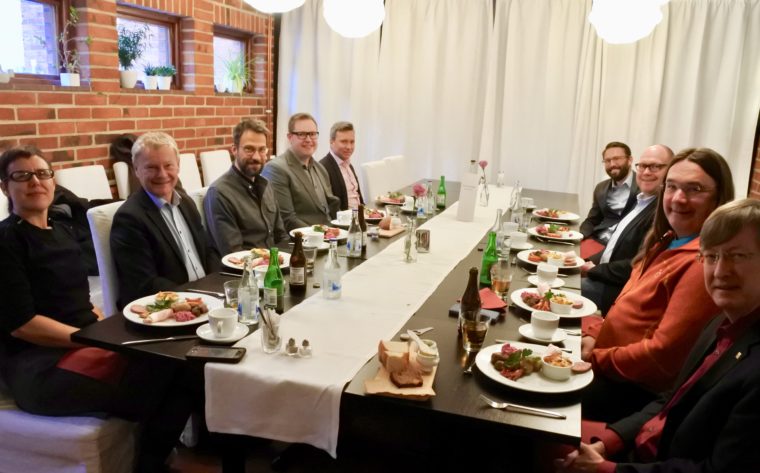
Idag åt vi lunch med alumner från Consultancy Management programmet för två år sedan.
Trevlig första advent!
Inför den stundande julledigheten och julklappsinköpen vill vi passar på att tipsa om några av våra och våra vänners favoritböcker. Först ut är ett tips från en start-up som sitter på KTH Innovation och jobbar med AI (Artificiell intelligens), ett av årets mest omdiskuterade ämnen. Boken heter Superintelligence och är skriven av Nick Boström. Trevlig läsning önskar vi och Eatit er alla!
Ingenjören Kai Wärn utsedd till Årets ledare 2017
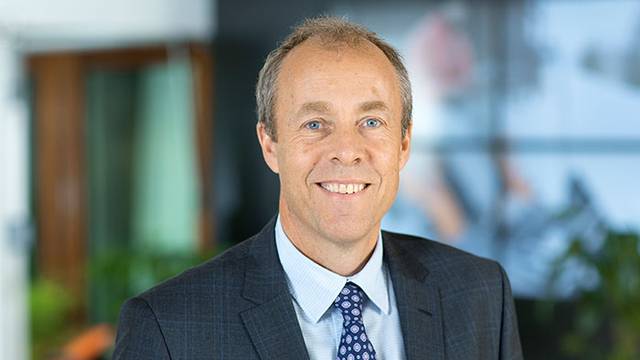
Stort grattis till Kai Wärn som utsetts till årets ledare 2017. Priset delas ut av tidningen Affärsvärlden till årets mest framstående ledare inom näringsliv, institutioner och myndigheter. Kai Wärn är verkställande direktör på Husqvarna och kan även ses som föreläsare här hos oss på KTH Executive School. Läs en intervju av Kai i Ny Teknik.
Vi har fantastiska produkter och innovation, fantastisk historia, starka vägar till marknaden och vi vill leda och driva den här industrin. Det kan man inte göra om man tjänar 5 procent. Då är man för svag.
Konsekvenser när internet blir vår nya arbetsplats

Internetstiftelsen släppte för ett tag sedan sin årliga studie. Det mesta bekräftar det du redan visste. Sammanfattas: Fortsatt ökning mest överallt.
Mer intressant är kanske därför det här:
1. 90 % av alla som jobbar med IT, yrket som redan dominerar storstäderna, jobbar hemifrån ibland. Gränsen kontoret och hemmet suddas ut.
2. Hälften av alla läser sen mail på semestern. Värst är män i åldern 36-45. Å andra sidan använder 80 % av alla nätet på jobbet, för privata ändamål. Gränsen arbete och privatliv suddas också ut.
How Elon Musk solves problems
Elon Musk have change the car industry with Tesla, and projects like Hyper loop and SpaceX often reach the news. But in this interview he talks about how he want to change the way we build tunnels for cars by changing the tools and the requirements for the tunnel. It is interesting to see how he adress a problem and how he step-by-step working towards a solution. Look at the interview about 3D tunnels and the future for Elon Musk.
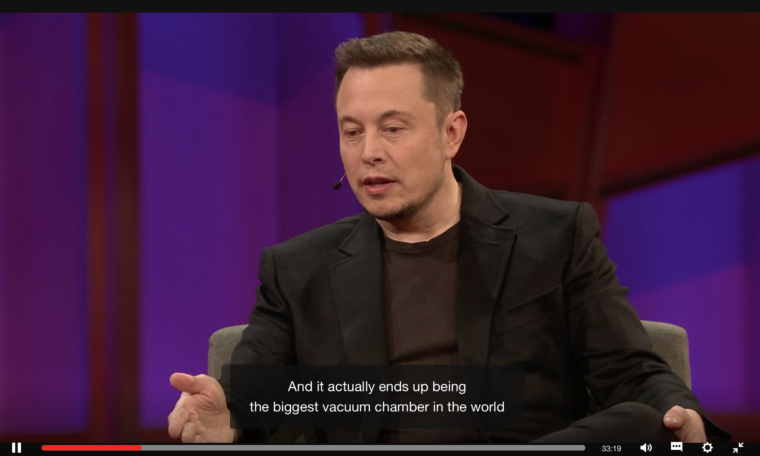
You drop the diameter by a factor of two and the cross-sectional area by a factor of four, and the tunneling cost scales with the cross-sectional area. So that’s roughly a half-order of magnitude improvement right there. Then tunneling machines currently tunnel for half the time, then they stop, and then the rest of the time is putting in reinforcements for the tunnel wall. So if you design the machine instead to do continuous tunneling and reinforcing, that will give you a factor of two improvement. Combine that and that’s a factor of eight.