Water scarcity on islands: how to stage and navigate collective learning

Publicerat 19 December 2017

There I was on the island Vis far out in the Croatian archipelago, surrounded by beautiful turquoise water to participate in a workshop about water shortage on small European islands arranged by the Water Saving Challenge Project. Once again the same ingredients; a wickedproblem, a diverse group of knowledgeable actors and the tension between holistic ambitions, and specific and localized solutions – they seem to attract my attention. Collaboration, cross-sectoral dialogues and broad participation are argued for as key measurements in almost all sustainable development policies. This seems logical given that the present complex challenges require combination of a diversity of knowledge, and multi-scale and multi-sector approaches. However, I think we have all been participating in too many workshops, discussing challenges, barriers and potentials, with a nagging feeling that it is not enough for the needed societal  transformation. I was curious to find out if the workshop at Vis could be different.
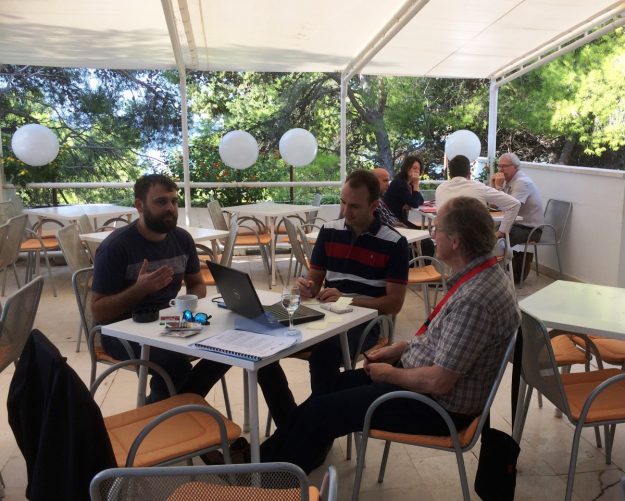
The setting and process leadership are keys for successful collaboration and learning

Shortage of water is one symptom of our inability to handle water as a wicked problem, which has become an everyday reality for the inhabitants on many small islands. The task for the group of islanders gathering on Vis in September was to identify strategies to re-match water use with water availability but without losing sight of other important values such as a viable tourism providing jobs and income or local food production. What new ways of thinking, organizing and doing are needed to transform the water governance and how can the islands help each other?

Our process leader Christian Pleijel from the Kökar Island in Åland, works at KTH Executive School and is also the vice president of the European Small Islands Federation, used two tools to facilitate the discussions. The Ishikawa fish bone is designed to identify causes building up to a certain effect – in our case to identify all aspects of importance to achieve a water saving effect. The fishbone was combined with a method for parallel thinking by the use of six thinking hats developed by Edward de Bono. The thinking hats is a way to look at a certain issue from one direction at a time – the white hat as fact based and neutral, the red hat emotional, the black hat cautious, the yellow hat optimistic, the green hat creative and the blue hat organization. I had not before experienced these tools and looked forward to learn more about their potential.

However, what I soon discovered is that these are just yet another set of tools and with many similarities with tools that I have used or experienced in various collaborative processes before. It is not the tools that make a workshop contributing to real learning and change, it is the setting in which they are operationalised. What made this workshop a collective learning about island water saving was the stage, the actors and the process leader that used the tools.

The stage was very carefully designed based on extensive field studies on each of the eight islands represented. These field trips were as much about investigating the present water situation on respective island, as they were about establishing relationships and building trust that enabled the islanders’ engagement in the knowledge exchange and their support of a collective learning community. Furthermore, the stage is not just about what happens in the sessions which usually have a clear structure, roles and goals, but what happens in-between the sessions, during field-trips, coffee breaks and dinners. This is when new relationships are established that are necessary for future remote collaborations to be successful.
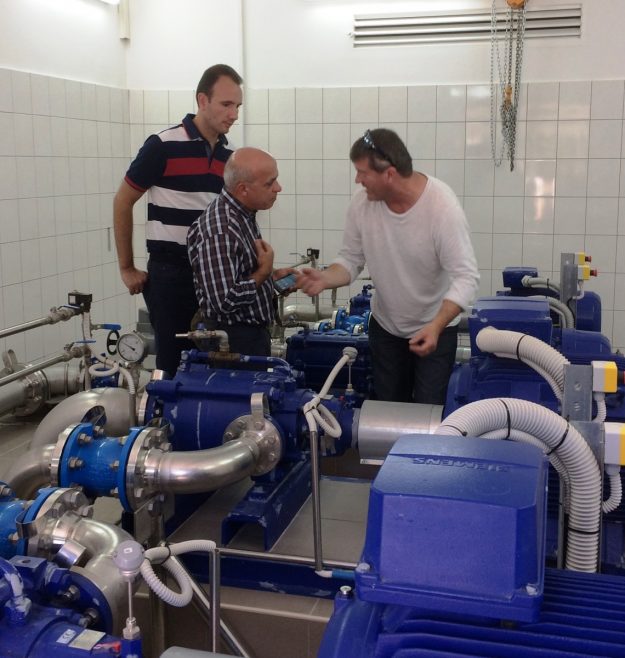
The importance of the space between sessions in a workshop. This is when relationships are built and long term learning partnership can start. A much appreciated visit to the Vis Island water center.

The actors also need to trust the process leader and each other in order to fully contribute to the joint process – the workshop play. Christian is himself an islander with personal experiences about what it means, combined with a long career working with people, leadership, innovations and businesses. In order to address wicked problems a diverse set of knowledge needs to be combined, demanding the process lead to be like a chameleon when interacting with this diversity. Like a director of a play you need to know when to start, stop, go back, fast forwarding by tweaking the tools so they are as purposeful as possible in relation to the process dynamic.

In the end fish bones covering many aspects of the water saving challenges on each island was drawn and the participants had been cautious, creative and emotional along the way with a strong foundation in facts and possible interventions in terms of governance. But, most importantly it was decided that this workshop was just the beginning of a more long-term exchange between the islands and that they will become learning labs to support a larger network of islands in the future.

What I bring with me from the three days with great islanders from all over Europe is that a workshop that enable not just knowledge exchange but real learning, needs to be carefully designed as part of a larger setting and requires deep skills in how to set a stage, encourage actors and use the right tools in the right moment. This might be common sense in other sectors but within sustainable development there is a clear need to highlight and develop skills in process design, leadership and facilitation so that we can move away from disappointing efforts of collaboration into meetings that enable societal transformation.

/Sara Borgström
Assistant Professor, Strategic Sustainability Studies
KTH Royal Institute of Technology

Read more about this project linked to KTH and KTH Executive School  here.
Original the blogpost was published at kth.se.

Samlade boktips inför jul och starten på det nya året

Publicerat 18 December 2017

Under december månad tipsar vi om våra favoritböcker som vi tror kan ge er nya tankar inför det nya året. Vi vet att många passar på att läsa böcker och ta in ny information när det lugnar ner sig i mellandagarna och under de första dagarna på det nya året. Vi ger er därför tips på de böcker vi tycker ni ska spana in eller som kan fungera som bra julklappar till andra.

  1. Superintelligence,  av Nick Boström.
  2. Monetizing Innovation, av Madhavan Ramanujam och Georg Tacke.
  3. Liv 3,0, av Max Tegmark (kan köpas med med rabatt för 175kr fram till 23/12 om man uppger  “KTH3advent” i kassan hos Bokus).

Läs mer

Boktips på tredje advent!

Publicerat 17 December 2017

Boktipset den tredje advent kommer från Staffan Movin, vår programdirektör för Infra Service programmet. Idag tipsar vi om Liv 3.0 skriven av Max Tegmark. Boken tar upp att Artificiell intelligens, AI, är inte längre science fiction. Den är ett faktum och den förändrar våra liv och vårt samhälle, men hur och bör vi vara oroliga?

Vill du köpa den till rabatterat pris (175 kr) använd koden “KTH3advent” i kassan om du handlar boken på Bokus. Koden gäller fram till den 23/12.

Det största som har hänt sedan internetbanken

Publicerat 15 December 2017

Digitaliseringen tillsammans med ny lagstiftning ritar återigen om kartan för en bransch. Denna gång är det finansbranschen som kommer genomgå stora förändringar genom införandet av det nya EU-direktivet PSD2.

Direktivet innebär att bankerna inte längre att ha monopol på sina kunders kontoinformation och betaltjänster. Det nya direktivet ska nämligen ge alla företag möjlighet att använda sig av bankernas information.

Exakt hur stor effekt betaltjänstdirektivet PSD2 kommer att få tvistas det om. Klart är att många bedömare har spått att EU-direktivet har potential att skaka om den finansiella sektorn i Sverige. En effekt är att bankerna måste dela med sig av kunddata till tredje part (förutsatt att kunderna själva vill det). Det bäddar för nya startups inom fintech, såväl som för bättre förutsättningar för de som redan är på banan.

Vissa kallar det för “det största sedan internetbanken”, medan andra är rädda för den ökade risken när nu än mer av vår personliga data kan delas till fler aktörer.

Vi måste lära oss att hantera det nya digitala landskapet.
Niklas Arvidsson, KTH.

Niklas Arvidsson, universitetslektor på KTH som studerar marknaden för betaltjänster, har intervjuats om detta av Ekonomiekot på Sveriges Radio. Lyssna på intervjun här, den börjar 06.15 minuter in i programmet.

Decemberkrönika från Johan Olsson

Publicerat 13 December 2017

Nyss en promenad här på KTH Campus och unnade mig att reflektera över KTH:s Konsult-chefsprogram 2017 som vi avslutade för ett litet tag sedan. Det är mitt första ”egna” program och det känns som en bra början – programmet gick bra, deltagarna var nöjda, och jag hade kul. Här kommer några tankar om programmet och ett tips till dig där ute i det ständigt föränderliga landskapet av konsulter, arkitekter, teknik, konkurrenter och kunder

Först grattis till alla duktiga och energiska deltagare i årets program. Du skulle ha sett dem in action. Alerta och frågvisa på alla föreläsningar; framåtlutade och energiska på alla grupp-övningar; nyfikna och positiva i samtal och samvaro med de andra i gruppen; och fokuserade som tusan när de jobbade med handlingsplanen för sin egen strategiska utmaning. Bra jobbat alla deltagare i årets konsultchefsprogram! Jag är priviligierad som fick vara med er.

Läs mer

A methodology that can help 80% of all Swedish companies survive the next 15 years

Publicerat 12 December 2017

Our experience from working with Swedish companies in developing their strategies, skills and mindset of working with innovation is following: They are great in facing the operational challenges of today and to discuss strategies of the distant future, but the gap in between, where the journey from today to the future will take place, many companies are lost. A methodology for working with both present, future and the time in between is Three Horizon Methodology for Innovation.
Applying the Three Horizon Methodology for Innovation

To become increasingly alert to market challenges, social shaping, emerging technology and other discoveries that might lead to new horizons, we need to connect what we do (or not do) ‘today’ with ‘possibilities’ in the future. Opportunities and challenges, often emerging, can be difficult to handle in existing organizations as they offer both conflicts and uncertainties. The way to counter concerns and handle the situation is to build an ongoing dialogue across the organization and to frame your innovation needs across the entire innovation / business portfolio.

Läs mer

Water scarcity on islands: how to stage and navigate collective learning

Publicerat 12 December 2017

There I was on the island Vis far out in the Croatian archipelago, surrounded by beautiful turquoise water to participate in a workshop about water shortage on small European islands arranged by the Water Saving Challenge Project. Once again the same ingredients; a wickedproblem, a diverse group of knowledgeable actors and the tension between holistic ambitions, and specific and localized solutions – they seem to attract my attention. Collaboration, cross-sectoral dialogues and broad participation are argued for as key measurements in almost all sustainable development policies. This seems logical given that the present complex challenges require combination of a diversity of knowledge, and multi-scale and multi-sector approaches. However, I think we have all been participating in too many workshops, discussing challenges, barriers and potentials, with a nagging feeling that it is not enough for the needed societal  transformation. I was curious to find out if the workshop at Vis could be different.

Läs mer

A methodology that can help 80% of all Swedish companies survive the next 15 years

Publicerat 12 December 2017

Our experience from working with Swedish companies in developing their strategies, skills and mindset of working with innovation is following: They are great in facing the operational challenges of today and to discuss strategies of the distant future, but the gap in between, where the journey from today to the future will take place, many companies are lost. A methodology for working with both present, future and the time in between is Three Horizon Methodology for Innovation.

Applying the Three Horizon Methodology for Innovation

To become increasingly alert to market challenges, social shaping, emerging technology and other discoveries that might lead to new horizons, we need to connect what we do (or not do) ‘today’ with ‘possibilities’ in the future. Opportunities and challenges, often emerging, can be difficult to handle in existing organizations as they offer both conflicts and uncertainties. The way to counter concerns and handle the situation is to build an ongoing dialogue across the organization and to frame your innovation needs across the entire innovation / business portfolio.

Läs mer

Boktips på andra advent!

Publicerat 10 December 2017

Glad andra advent! Inför den stundande julledigheten och julklappsinköpen vill vi passar på att tipsa om några av våra och våra vänners favoritböcker. Idag tipsar Nicole Forsberg, Manager för pre-inkubatorn på KTH Innovation, om boken Monetizing Innovation skriven av Madhavan Ramanujam och Georg Tacke. Trevlig läsning önskar vi och KTH Innovation er alla!

Foresight and avoid painting yourself into a corner

Publicerat 8 December 2017

Did you know that the average CEO only spends about 2% of their time on long-term issues? Maybe you expected it to be more since factors like volatility, uncertainty, complexity, and ambiguity (VUCA) has made it so much more difficult to make decisions that leads to success in the markets of the future?

Profiting from Future Orientation

All our decisions are about the future and therefore they have to tackle the fundamental problem of its unpredictability. To make matters worse, the unpredictability increases exponentially with the length of the timeframe due to two drivers:

  1. The number of factors to consider and the number of interconnections between them simply grows too large, creating so called “wicked problems”.
  2. The long series of interactions make minimal changes in initial conditions cause very different outcomes due to the so called “butterfly effect”.

This may discourage investing more effort into future thinking, but at the same time research is showing that this is exactly what is needed! The positive effect of future orientation has been confirmed in several studies. One research project, for example, finds that only 6% of firms have a time-horizon longer than 5 years, but nearly all of these ranked high in business performance.

Läs mer